
Last updated November 16, 2026
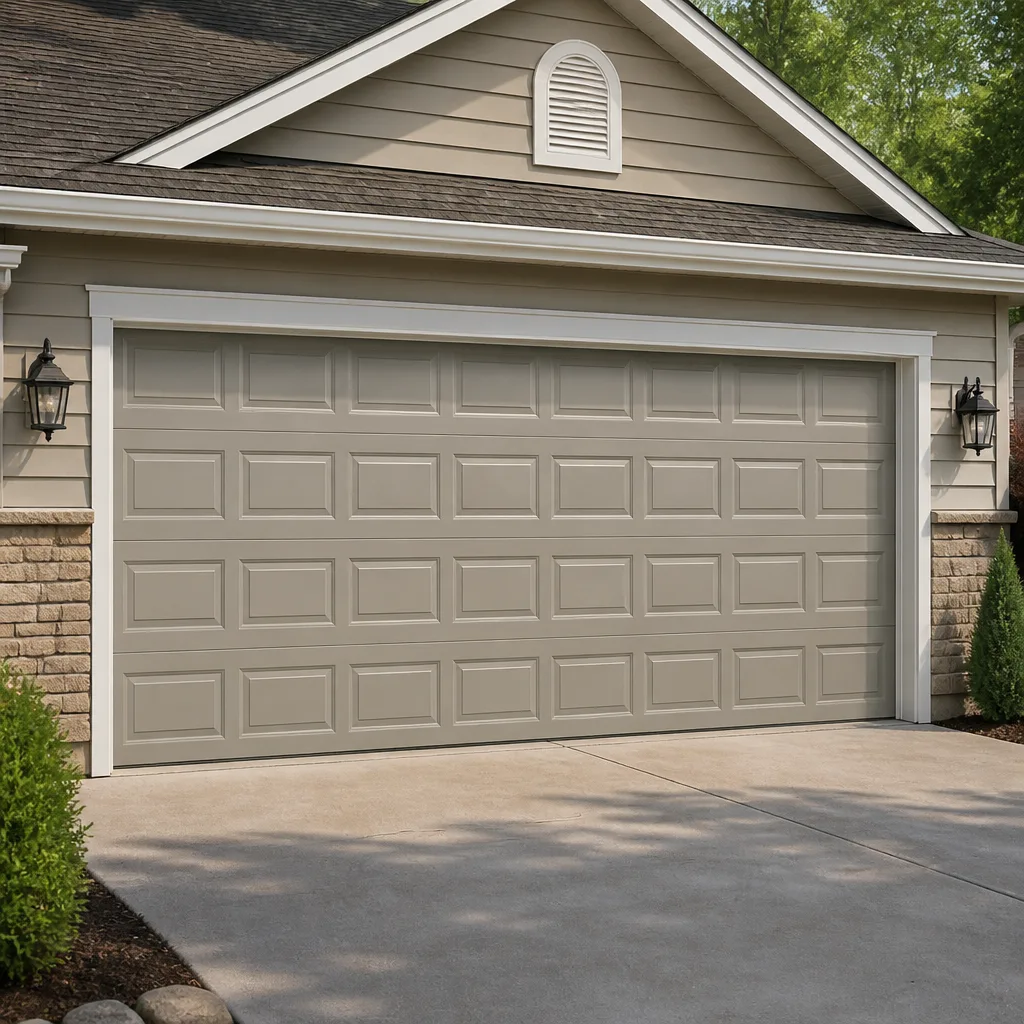 Raised-panel steel
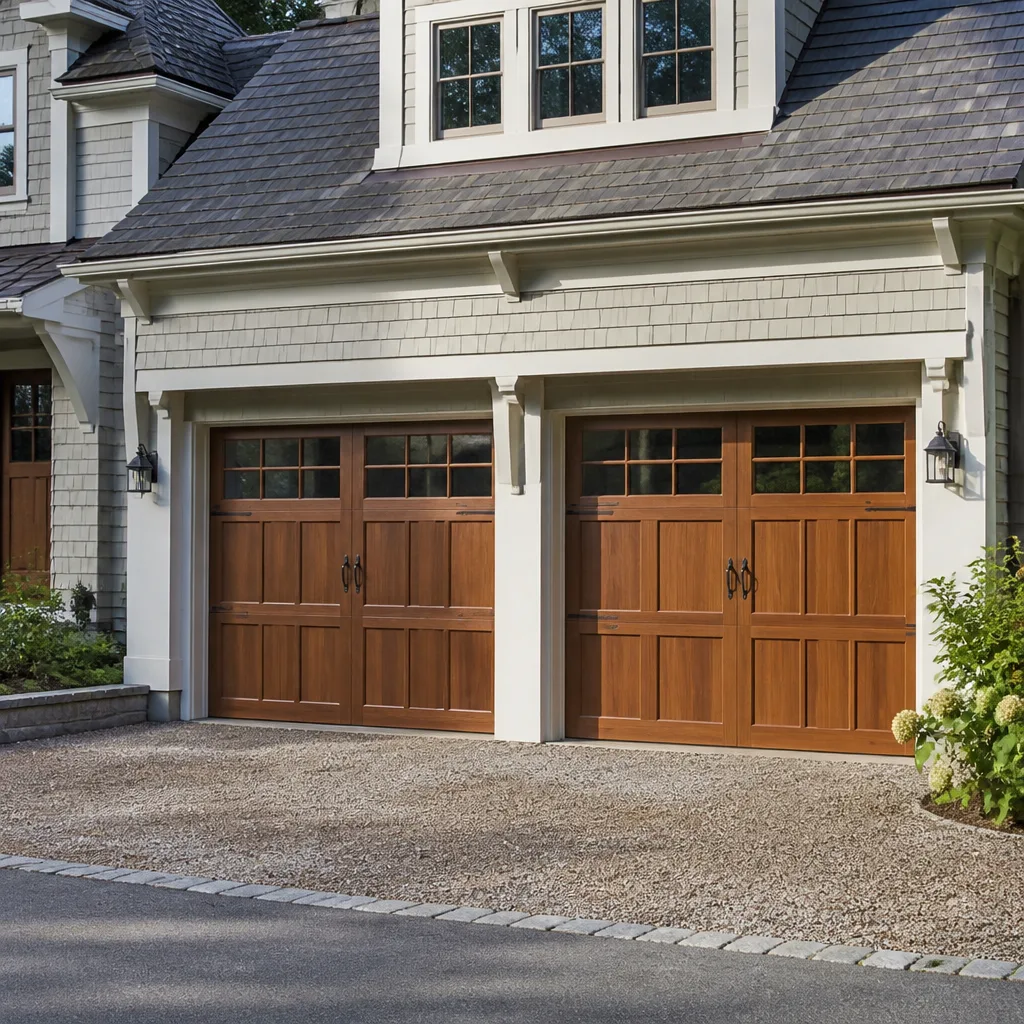 Carriage house
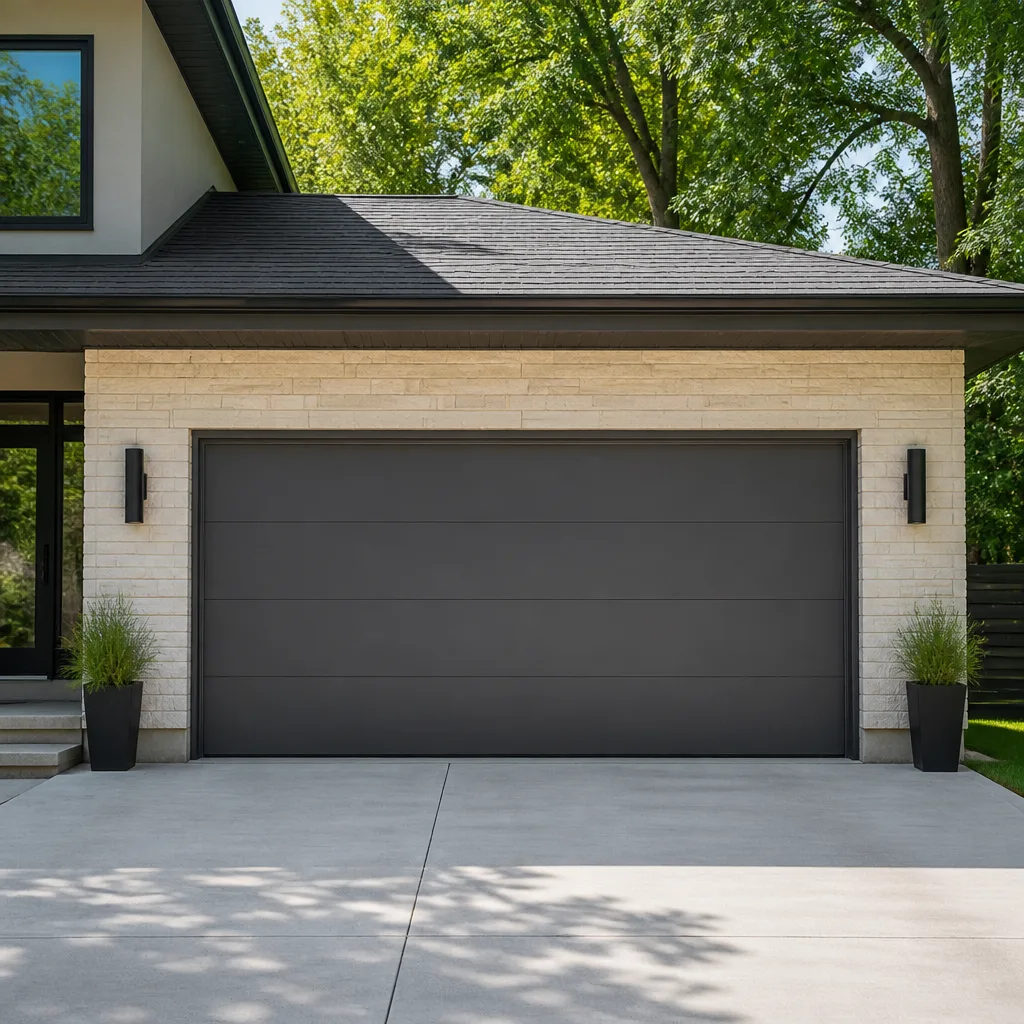 Modern flush
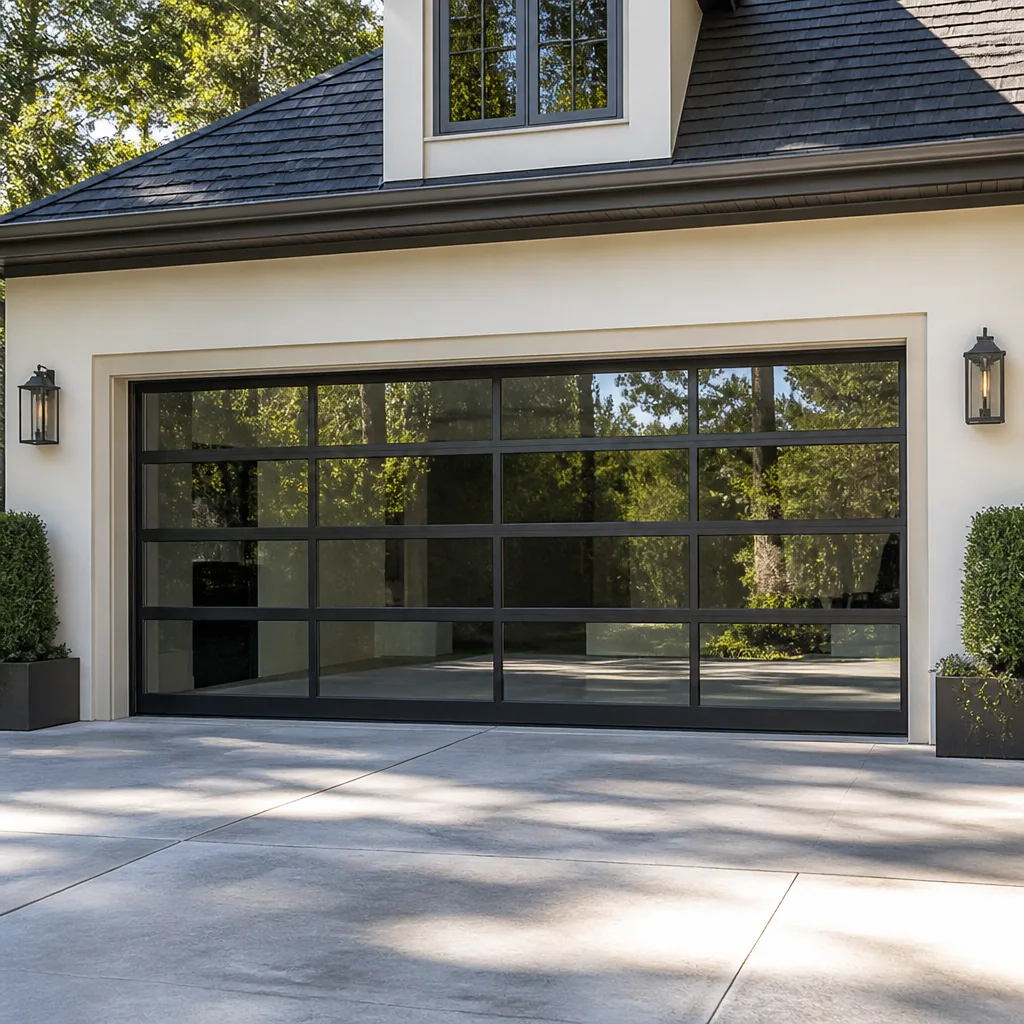 Full-view glass
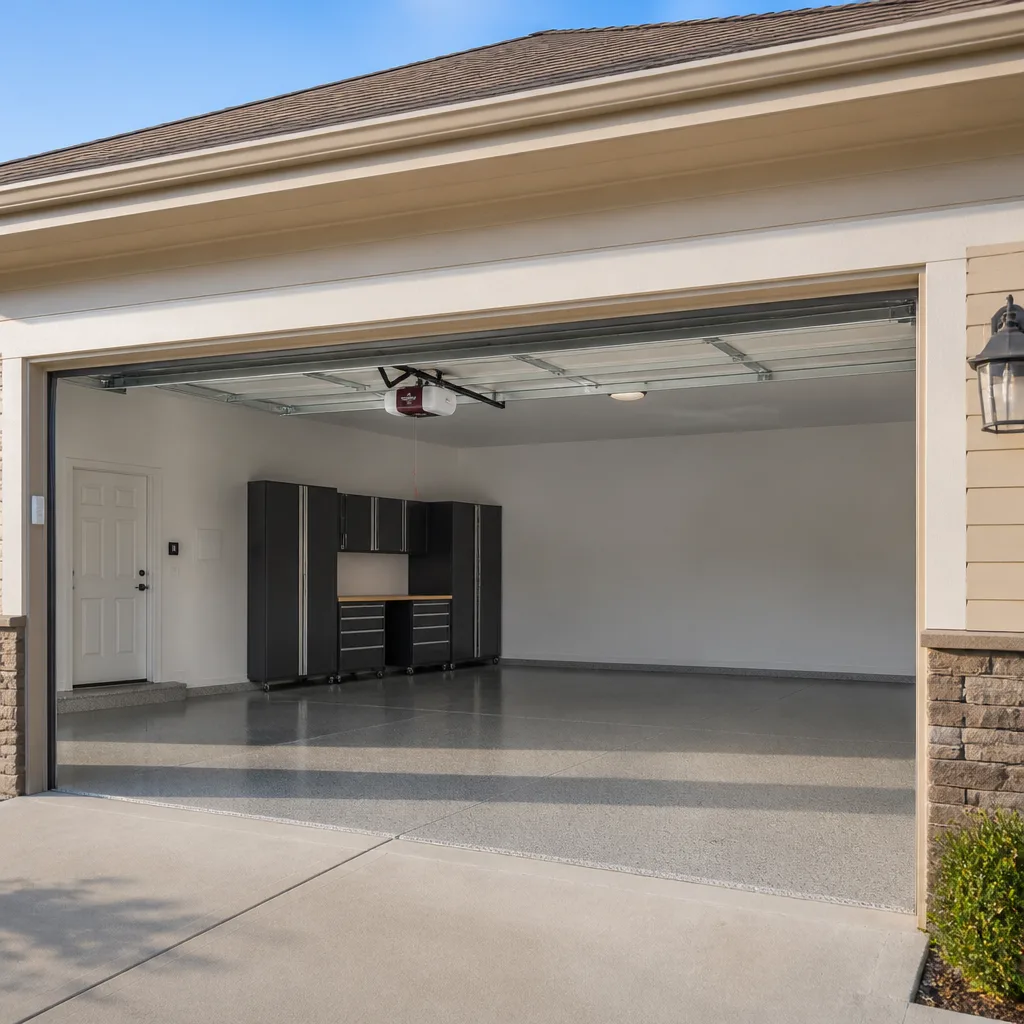 LiftMaster openers
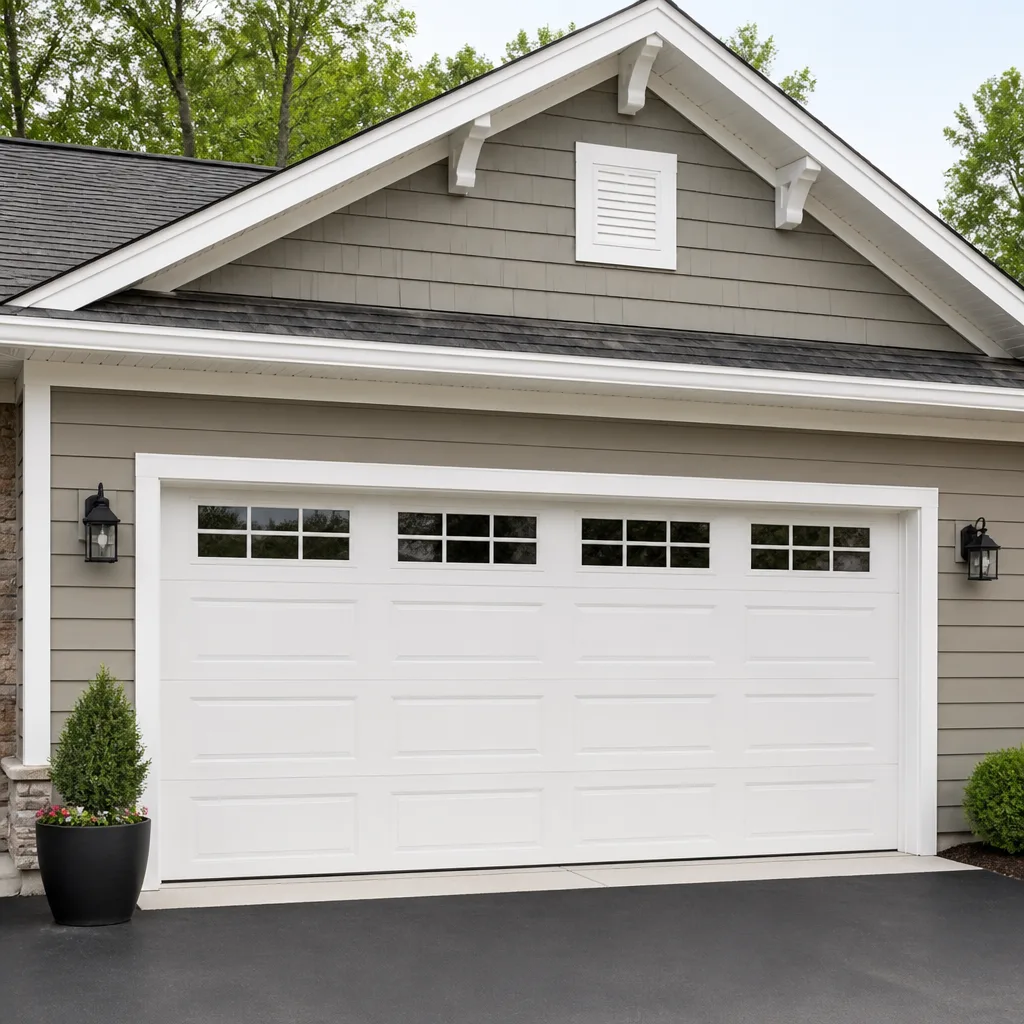 Chamberlain openers
Full 25-point door and opener safety check with every visit - springs, cables, rollers, tracks, and your LiftMaster or Chamberlain opener included
You get a price before we start. It does not change when the pro arrives.
Get your free estimateGarage Door Warning Signs: A Gresham Homeowner’s Reference Guide
A garage door that seems a little slow on a cold Gresham morning is not adjusting to the weather. It’s usually telling you the spring tension has drifted, and the opener is quietly working harder to cover for it. That extra strain is what turns a small spring adjustment into a motor that quits a few months later. Most of the warning signs we get called about sounded like normal operation to the homeowner right up until the door stopped moving. This guide walks through the sounds, the visual clues, and the opener habits that signal something is wearing out, so you can catch a problem while it’s still a simple repair instead of a panel and hardware job.
Quick Answer
Garage door warning signs worth acting on include grinding, popping, or scraping noises, a door that drifts to one side as it rises, a bottom seal that curls or lets water in, and an opener that hesitates, reverses partway, or lags when you press the wall button. Any of these means a component is wearing or misaligned, and a few of them (a snapped cable, a door that won’t stay up, a bent track) mean you should stop using the door and call for garage door repair before something heavier fails.
Styles & brands we work with
- Raised-panel steel
- Carriage house
- Modern flush
- Full-view glass
- LiftMaster openers
- Chamberlain openers
Table of Contents
- Why Garage Doors Warn You Before They Fail
- What the Sound Is Telling You: Grinding, Popping, and Scraping
- Visual Signs Most Homeowners Misread
- Opener Warning Signs That Have Nothing to Do With the Door
- Gresham-Specific Signs: Rust, Curling Seals, and Water Stains
- Annoying But Safe vs. Stop Using It Immediately
- A Seasonal Checklist for Gresham Homeowners
- When to Call a Professional
Why Garage Doors Warn You Before They Fail
A garage door is a balance of opposing forces. The springs carry most of the door’s weight, the cables connect the springs to the bottom corners, the tracks guide the rollers, and the opener only has to nudge a door that’s already mostly weightless. When any one of those parts starts to wear, the others pick up the slack for a while. That’s the window where the warning signs show up, and it’s also the window where most homeowners dismiss them.
The reason the signs get ignored is that a garage door is loud and heavy by nature. A little grind sounds like a big metal door doing big metal door things. A slight drift to one side looks like the door settling. But those small changes are how a system communicates that a part is out of adjustment. In our experience, the homeowners who catch problems at this stage end up with a straightforward repair, while the ones who wait usually end up replacing a cable, a spring, and sometimes the bottom panel that got hit when the door came down crooked.
The good news is that a garage door in Gresham gives you months of warnings on most failures. The trick is knowing which sound, drift, or hesitation is the early signal versus the harmless quirk. The rest of this guide breaks those signals down by category, so you can read your own door the way a technician does.
Key Takeaways
- Noise, drift, and opener hesitation are early warnings, not normal operation.
- Cables and springs carry the load; the opener only assists, so a struggling opener often means a door problem.
- Some signs are safe to watch and some mean stop using the door right away.
- Gresham’s wet winters make seals, rust, and water intrusion worth checking every fall.
What the Sound Is Telling You: Grinding, Popping, and Scraping
Sound is the fastest diagnostic tool a homeowner has, and the type of noise narrows down the cause before anyone even looks at the door. Grinding, popping, and scraping come from three different places in the system, and each points to a different fix. Learning to tell them apart saves you from describing the problem as “it’s just loud” when you call.
Grinding
Grinding is a continuous rough rumble that usually gets louder as the door moves. It most often comes from dry or worn rollers, a torsion tube or hinge that needs lubrication, or a roller that’s seized and dragging along the track. Grinding is rarely an emergency on its own, but it accelerates wear on everything it touches. Left alone, a seized roller can chew into the track and turn a roller swap into a track replacement.
Popping
A single sharp pop when the door starts to move, or a series of pops as it travels, points to the springs or the torsion hardware. It can be a spring that’s slipping on its winding bars, a cable jumping its drum, or a hinge that’s worked loose. Popping that shows up suddenly and repeats is the one to take seriously, because it often comes just before a spring fails or a cable snaps.
Scraping
Scraping is metal dragging on metal, and it’s usually a track problem: a bent section, a roller pulled out of the track, or a door panel that’s out of alignment and rubbing the frame. If you hear scraping, look along the tracks for a kink or a roller sitting outside the channel. A door that’s scraping its track can jump off completely, so this is one to fix promptly.
A quick sound-to-cause reference:
- Continuous grind: dry or worn rollers, dry torsion tube, loose hinge.
- Sharp pop at start-up or during travel: spring or cable hardware slipping, loose hinge.
- Metal-on-metal scrape: bent track, roller out of the channel, panel misalignment.
- Rattle or bang: loose panel fasteners, worn hinge bushings, a door that’s out of balance.
If you can’t place the sound, note when it happens (open, close, or both) and whether it changes with the weather. That detail alone helps a technician narrow it down when you call Sycamore Garage Door Repair.
Visual Signs Most Homeowners Misread
The visual clues are where homeowners get tripped up, because the door can look straight and still be failing. A door that appears level but drifts to one side as it opens is the classic example: that drift is almost always a cable problem, not a track problem. Cables stretch and wear unevenly, and when one side carries less tension than the other, the door tilts. The track usually gets blamed because it’s the part you can see, but a straight track with a drifting door means the cable is the place to look.
Here are the visual signs that are easy to misread and what each one actually points to:
- Door drifts to one side: uneven cable tension, a frayed cable, or a spring that’s lost some tension on one side.
- Door looks straight but won’t stay up when you lift it by hand: a spring has weakened or broken. A working door should hold its position partway open.
- Gap between door and floor on one side: a bent track, a worn roller, or the door out of level.
- Cables that look frayed, kinked, or wound loosely on the drum: a failing cable. Stop using the door.
- Sagging top panel or a panel with visible dents along the bottom: the door has taken an impact, and the hardware may be stressed.
- Rollers sitting crooked in the track or a visibly bent track section: alignment problem that will wear out other parts fast.
One misread worth calling out: a door that sits slightly crooked but the track looks fine. Homeowners often assume the track is bent because the door looks off. In nearly every case, the track is straight and the cable is the culprit. That distinction matters, because adjusting a track that isn’t bent won’t fix a cable that’s about to fail.
Opener Warning Signs That Have Nothing to Do With the Door
An opener problem can look like a door problem, and vice versa. The trick is separating the electronic side from the mechanical side, because that determines whether you need garage door opener repair or door repair. Three opener behaviors are worth knowing: delayed response, partial reversal, and wall button lag.
Delayed response
You press the remote and the door moves a few seconds later, or it takes a second press to engage. This can be a weak remote battery, a misaimed safety sensor, or a logic board that’s struggling. It can also be the opener compensating for a door that’s heavier than it should be. If the delay shows up alongside a slow door, suspect the door’s springs first, because the opener is doing extra work.
Partial reversal
The door starts down, stops, and reverses partway. The most common cause is the safety sensors: misaligned, dirty, or blocked by something small like a leaf or a cobweb in the Gresham damp. Partial reversal can also come from a force setting that’s too sensitive or a door that’s binding in the track. Sensors are easy to rule out first, but if they’re clean and aligned and the reversal continues, the door is likely binding.
Wall button lag
The wall button works but the remotes don’t, or the button responds sluggishly. This points to the opener’s receiver, a battery issue, or interference. Opener brands handle this differently, which is why knowing the actual model helps. Whether it’s a LiftMaster, Chamberlain, Genie, or Craftsman unit, the diagnostic path changes, and a technician who works across those systems can identify it faster than a generic checklist can.
- Remote delays but wall button is instant: remote battery, receiver, or interference.
- Door reverses partway down: safety sensors first, then door binding or force setting.
- Opener hums but door doesn’t move: broken spring, stripped gear, or a door locked out.
- Lights flicker or stay on: logic board or wiring issue.
- Opener runs harder or sounds labored: the door is heavy, which is a door problem, not an opener one.
Gresham-Specific Signs: Rust, Curling Seals, and Water Stains
Gresham’s wet winters and cool, damp springs put a specific set of stresses on a garage door, and three local signs show up again and again: rust streaking on the door face, a bottom seal that curls inward, and water staining on the floor under the door. Each one points to a structural issue worth addressing before it spreads.
Rust streaking on the door face
Streaks that run down from hinges, seams, or the bottom edge are usually moisture sitting where it shouldn’t. On steel doors, that’s often a sign the paint film has been breached by a scratch or a worn edge, letting water in behind the finish. Rust on hinges and rollers is easier to catch early and points to a lubrication gap. A door that’s rusting at the seams needs the finish addressed, not just a wipe-down, because the moisture is coming from inside the joint.
Bottom seal curling inward
The bottom seal is the rubber or vinyl strip that meets the floor. In Gresham’s wet winters it takes a beating, and when it curls inward it stops sealing. That lets water, cold air, and pests in, and it also lets the door sit unevenly against the floor. A curling seal is inexpensive to replace and worth doing before a wet fall turns into a wet winter.
Water staining on the floor under the door
Staining directly under the door line usually means water is getting past the seal, but it can also point to the door not sitting flush or the threshold being out of level. If the stain appears on one side, that matches the door-drift sign above and suggests a cable or level problem rather than just a worn seal. Water coming through repeatedly can also affect the concrete and the door’s bottom panel, so it’s worth diagnosing the cause rather than just mopping up.
If you live in one of the older Gresham neighborhoods where doors have been through many wet seasons, checking these three signs every fall is the simplest maintenance habit you can build. For doors with a painted steel face, a Clopay or Amarr panel that’s been repainted a few times may be hiding rust at the seams, and that’s worth a close look.
Annoying But Safe vs. Stop Using It Immediately
The most useful thing you can learn from this guide is which signs mean “watch it” and which mean “stop.” Getting that call wrong is how a small repair becomes a bigger one.
Annoying but safe to use while you watch
- Grinding or rumbling that hasn’t changed the door’s movement.
- Remote delay with a working wall button.
- A bottom seal that’s starting to curl but the door still closes.
- Rust streaks that haven’t reached the seams or caused binding.
- A slight rattle when the door travels.
Stop using the door immediately
- A cable that’s snapped, frayed, or hanging loose.
- A door that won’t stay up when you lift it partway.
- A popping sound followed by a door that won’t open.
- A door that’s visibly crooked or off its track.
- A door that’s come down on something or is hanging at an angle.
If you’re in the second group, don’t run the opener to “see if it works.” Running a door with a broken cable or spring puts the opener and the panels at risk, and the door can come down unevenly. Disconnect the opener (most have a manual release cord) and leave the door where it is. Then call for a professional to look at it.
A real task for a trained technician: springs and cables are under high tension and can cause serious injury if handled without the right tools and technique. Don’t try to adjust or replace them yourself. What you can do safely is listen, look, and note what’s happening. That’s the information a technician uses to diagnose the system on arrival.
A Seasonal Checklist for Gresham Homeowners
Garage door warnings are easier to catch when you check for them at the right times. Here’s a simple routine that fits Gresham’s seasons, written as a numbered walk-through you can do in ten minutes.
- Listen on a cold morning. Open and close the door once and note any grind, pop, or scrape. Cold mornings are when spring tension issues show first.
- Watch the door travel. Does it move evenly or drift to one side? A drift means look at the cables.
- Look at the cables and springs. Fraying, kinks, or a spring that looks stretched or separated on one side are stop-and-call signs.
- Check the bottom seal. Run a hand along the rubber strip where it meets the floor. A curled or cracked seal needs replacement before the wet season.
- Test the balance. With the opener disconnected, lift the door partway by hand. It should stay put. If it sinks, the springs have weakened.
- Test the safety reversal. Put something small in the door’s path and confirm the door reverses. If it doesn’t, the safety system needs attention.
- Look for water stains and rust. Check under the door line and along the seams. Early rust is easier to stop than advanced rust.
- Note the opener’s behavior. Any new delay, partial reversal, or wall button lag is worth writing down so you can describe it accurately.
Do this once in the fall before the wet weather settles in, and once in the spring after it. That’s enough to catch most of the warning signs this guide covers, and it gives you a record to compare against if something changes.
See the difference
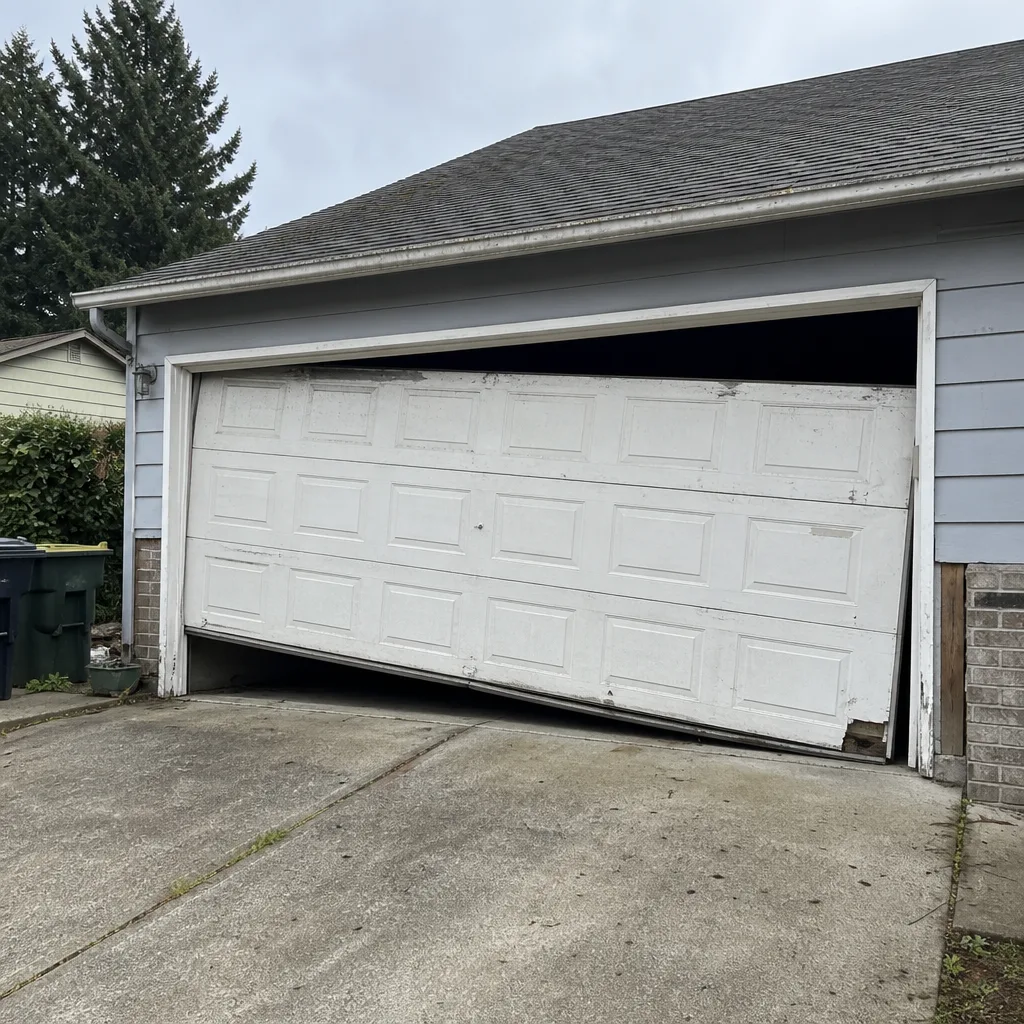 Before
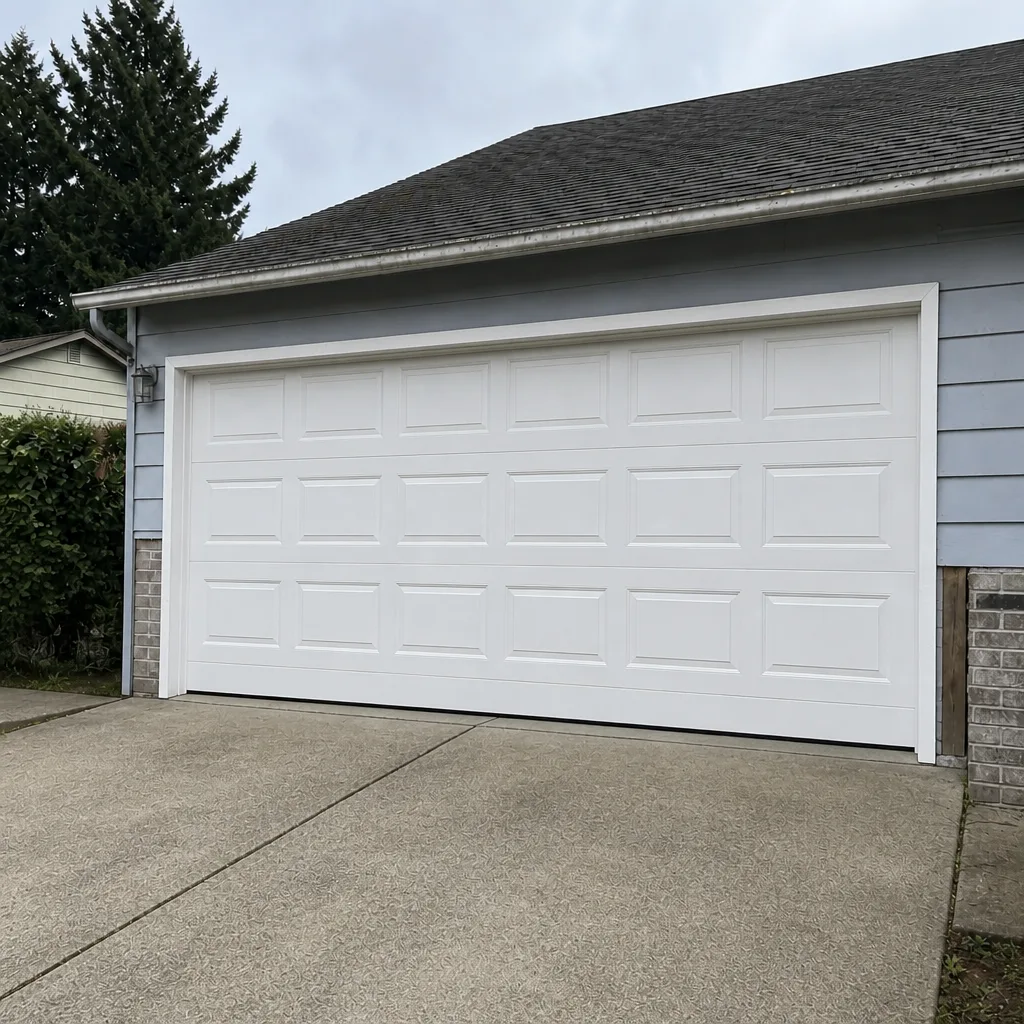 After
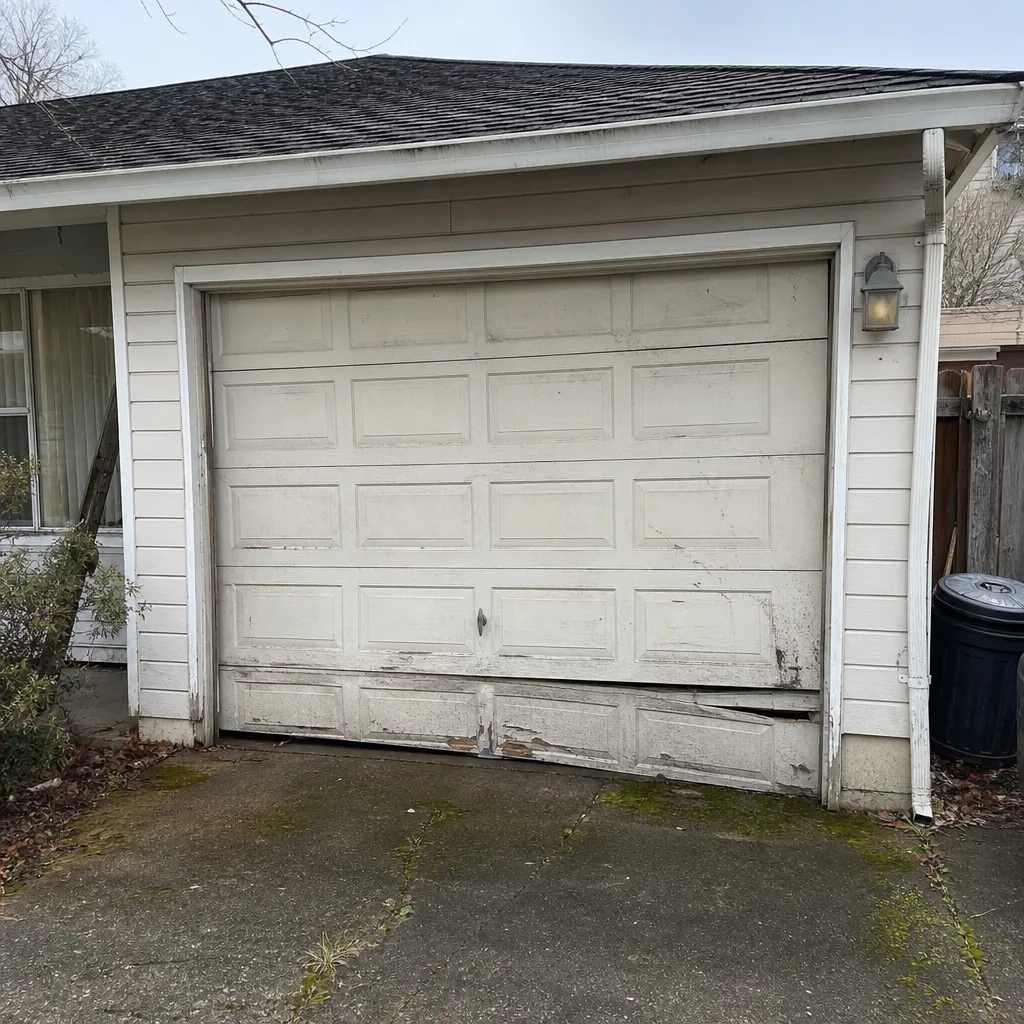 Before
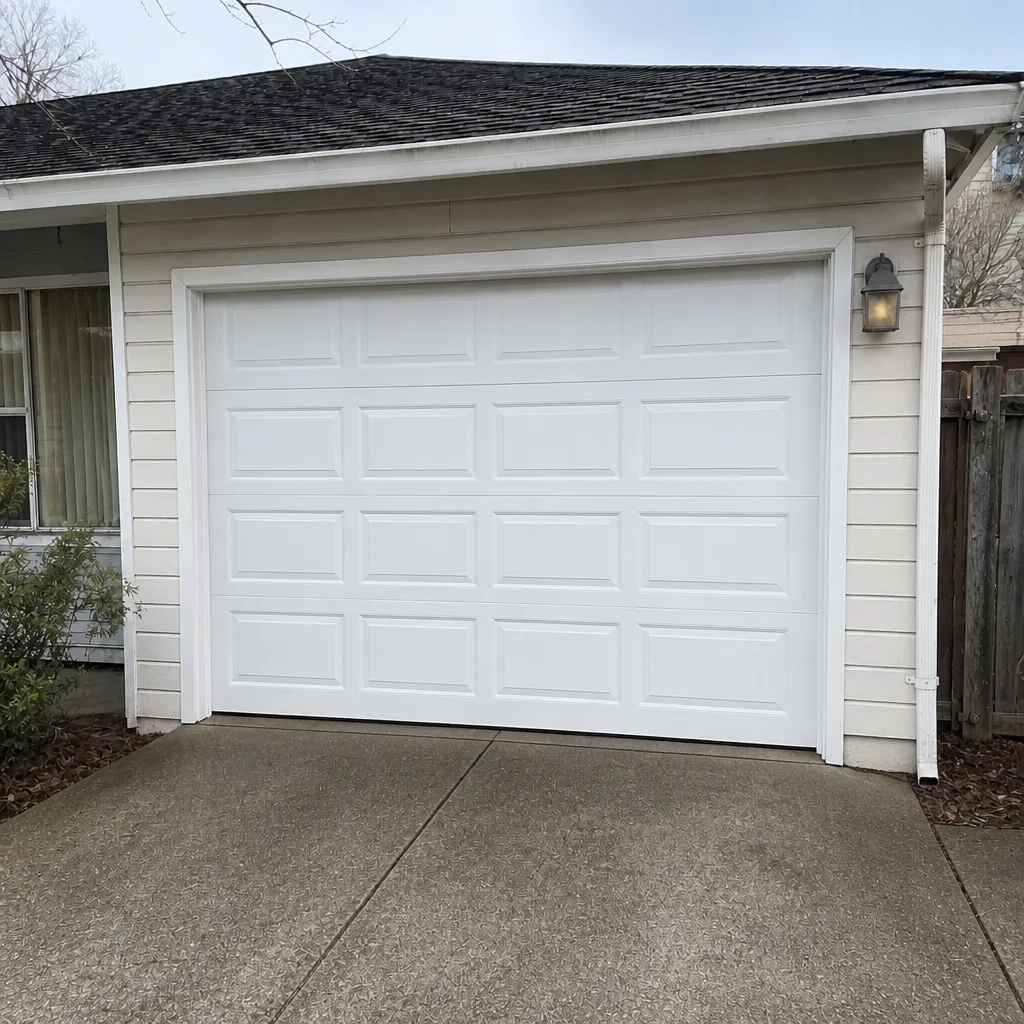 After
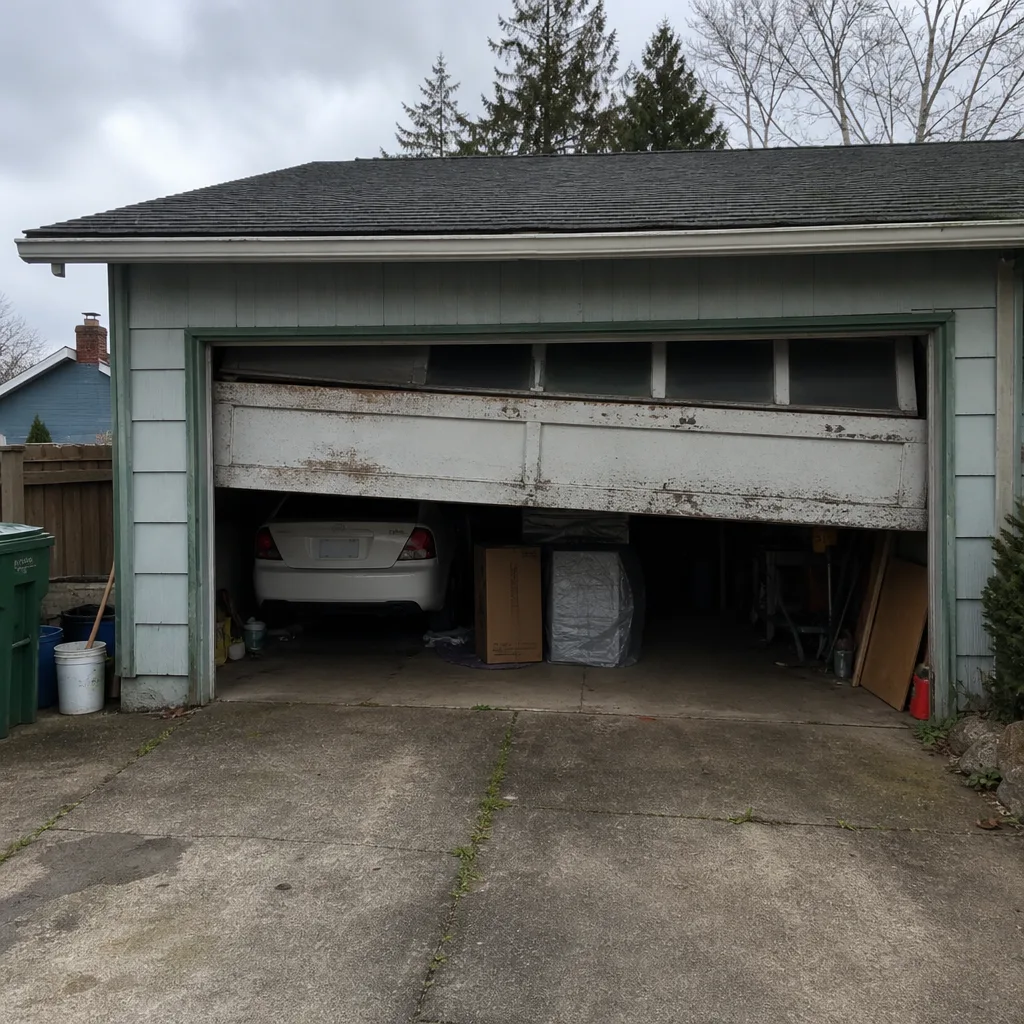 Before
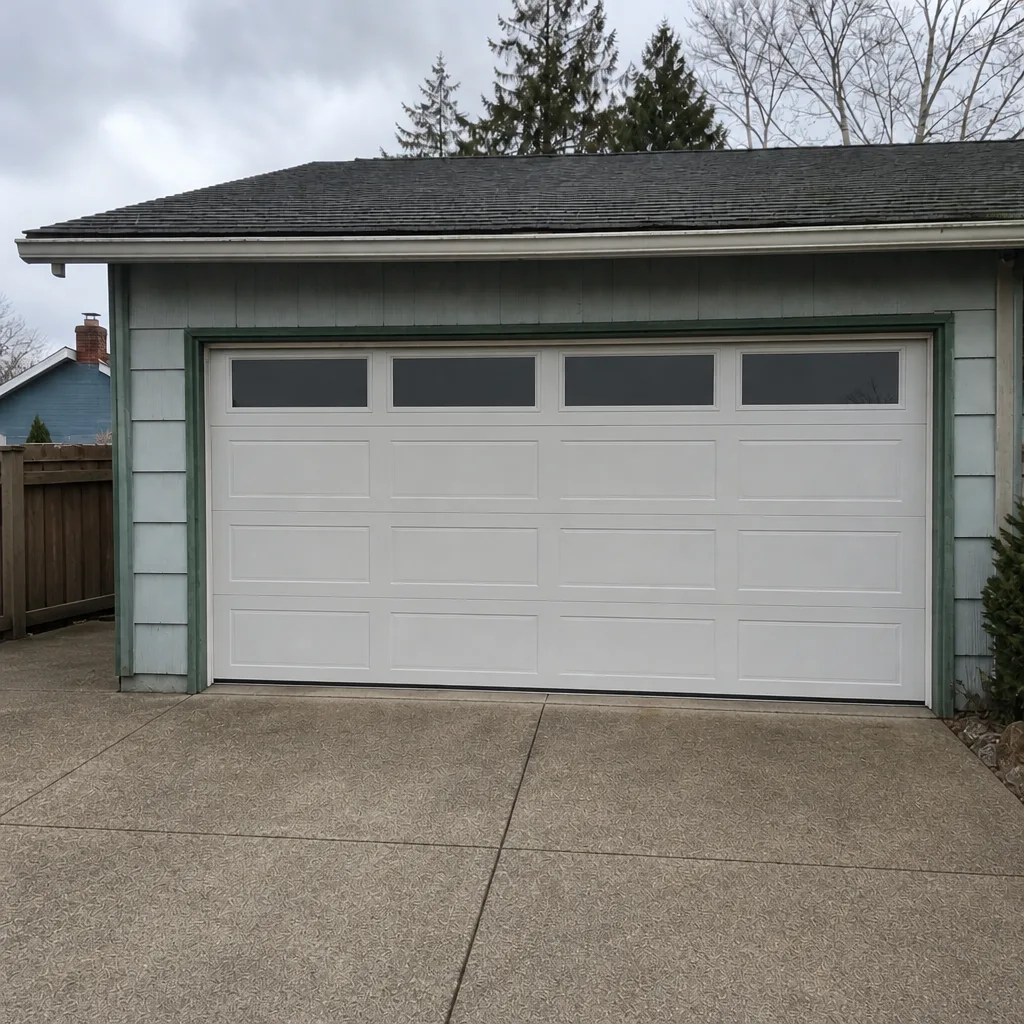 After
Common Mistakes to Avoid
- Assuming a slow door is just the cold. A door that ran fine all summer and struggles in the fall is telling you the spring tension has drifted, and the opener is covering for it. Ignore that and you’re shortening the opener’s life.
- Blaming the track for a drifting door. A straight track with a door that drifts is almost always a cable problem. Adjusting a track that isn’t bent won’t fix it.
- Lubricating a problem instead of fixing it. Oil quiets a grind, but it doesn’t fix a seized roller or a worn hinge. It just masks the sound until something fails.
- Running the opener on a door with a broken cable or spring. This is the mistake that turns a single repair into a panel-and-hardware job. Disconnect the opener and stop using the door.
- Ignoring the bottom seal through a Gresham winter. A curling seal lets water in, and water under the door leads to staining and eventually damage to the door’s bottom panel.
- Calling a general handyman for an opener symptom. A garage door is a specific system, and the opener and door work together. A technician who works both sides diagnoses it in one visit instead of two.
- Replacing the whole door when a repair would do. Drift, grinding, and hesitation are repair territory. A door with a bent panel or structural damage is the case for replacement, not a door that just needs a cable and a tune-up.
When to Call a Professional
Call for a professional when you hear popping that repeats, see a cable that’s frayed or hanging, notice the door drifting to one side, or find the door won’t stay up when you lift it. Call immediately if the door is crooked, off its track, or has come down unevenly. For opener symptoms like partial reversal, delayed response, or wall button lag, a call is worth making once you’ve ruled out the remote battery and cleaned the safety sensors. If you’re not sure which category a symptom falls into, that’s a good reason to call too, because a phone description usually settles it.
Sycamore Garage Door Repair offers free estimates in Gresham for repair, opener repair, and new installation. We work on the major door and opener brands, including LiftMaster, Chamberlain, Genie, Clopay, Amarr, Wayne Dalton, Craftsman, and Raynor, so a single call covers both the door and the opener. Our technicians have up to 12 years of experience. Call (866) 890-0843. We answer 24/7, with fast dispatch from 7am to 7pm, Sunday through Friday.
Frequently Asked Questions
The most common warning signs are grinding or popping noises, a door that drifts to one side, a bottom seal that curls inward, and an opener that hesitates or reverses partway. Rust streaking at the seams and water staining under the door are also common in Gresham’s wet climate. Any of these means a component is wearing, and catching it early keeps the repair small. For an exact assessment, call (866) 890-0843 – estimates are free.
Not usually. Grinding on its own is a watch-and-schedule sign, not a stop sign. It usually points to dry or worn rollers or a dry torsion tube, and it’s worth fixing because the wear spreads to the track. If the grind comes with a door that drifts or won’t stay up, treat it as more serious and stop using the door. Call (866) 890-0843 for an exact quote – estimates are free.
Usually not. A door that looks level but drifts as it opens is pointing to uneven cable tension or a frayed cable, not a bent track. A track is easy to blame because it’s visible, but a straight track with a drifting door means the cable is the place to look. Have a technician check the cables before the drift turns into a bigger failure. Call (866) 890-0843 for an exact quote – estimates are free.
Partial reversal is most often the safety sensors: misaligned, dirty, or blocked by a small bit of debris. It can also come from a door that’s binding in the track or a force setting that’s too sensitive. Clean and align the sensors first, and if the reversal continues, the door may be binding. Call (866) 890-0843 for an exact quote – estimates are free.
Stop using the door when you see a snapped or frayed cable, a door that won’t stay up when you lift it, a repeated popping sound, or a door that’s visibly crooked or off its track. Disconnect the opener and leave the door where it is, then call a professional. Springs and cables are under high tension and can cause serious injury if handled without the right tools. Call (866) 890-0843 – we answer 24/7, with fast dispatch from 7am to 7pm, Sunday through Friday.
Sometimes, yes. Delayed response, wall button lag, and remote issues can be purely electronic and have nothing to do with the door’s movement. But a lot of “opener problems” turn out to be the opener compensating for a heavy or misaligned door, so the two need to be checked together. A specialist who works both the door and the opener sorts that out in one visit. Call (866) 890-0843 for an exact quote – estimates are free.
The Bottom Line
Garage doors warn you well before they fail, and the warning sounds like normal operation only until you know what to listen for. Grinding points at rollers and dry hardware, popping points at the springs and cables, and scraping points at the track. A door that looks straight but drifts is a cable problem, not a track one. Locally, rust at the seams, a curling bottom seal, and water staining under the door are the Gresham signs worth checking every fall. Use the safe-versus-stop framework to decide whether to watch it or call, and never run a door with a broken cable or spring. Catching the warning early is what keeps a small repair from becoming a panel job.
If your door is showing any of the signs above, call (866) 890-0843 for a free estimate from Sycamore Garage Door Repair. We answer 24/7, with fast dispatch from 7am to 7pm, Sunday through Friday.
Written by the team at Sycamore Garage Door Repair.